

Introduction
Many people think of a chiropractic adjustment as a simple click or crack in the spine. But the sound is not the treatment. The real value lies beyond the click in how the body responds to a controlled input into the joints, muscles, and nervous system.
The Spine Is a Living Communication System
Muscles, ligaments, nerves, blood vessels, connective tissue, and sensory receptors surround the joints of the spine. These receptors constantly send information to the brain about movement, posture, pressure, tension, and body position. When spinal joint movement becomes restricted, the nervous system may receive altered information from that area.
The Adjustment as Neurological Input
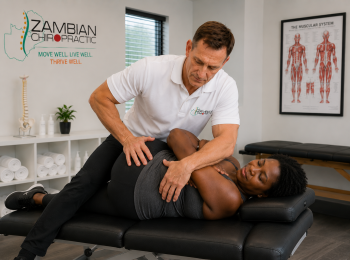
An adjustment introduces a quick, controlled mechanical input into a restricted or painful joint. This may change the sensory information travelling back to the brain. As the nervous system processes that input, surrounding muscles may relax, guarding may reduce, and movement may feel easier.
Why Do People Feel “Lighter” After an Adjustment?
Many patients say they feel lighter after an adjustment. This does not usually mean the body has changed in weight. It often means the body feels lighter in effort. Less guarding, less stiffness, better movement, and deeper breathing can create a sense of openness and relief.
Lightness Is Often Less Effort
When muscles stay tense for a long time, the body begins to accept that tension as normal.
The first place one usually feels this tension is in the shoulders and the neck muscles. Sometimes the lower back may feel stiff or pain can be experienced after sitting for too long. Breathing becomes shallow due to tightness of the thoracic cage. Movement generally becomes restricted in certain areas of the body.
However, after an adjustment, joint movement improves, muscles relax, and suddenly the body feels more open.
When a body moves with less resistance, people often interpret this as lightness.
Why Some People Sleep Better After an Adjustment
Some patients report sleeping better after treatment, which can be linked to reduced pain, less muscle tension, improved comfort, and a calmer nervous system. When the body feels less threatened, it may become easier to rest.
Pain, Tension and Sleep
One possible explanation for improved sleep after an adjustment is pain reduction. Pain is one of the most common reasons people struggle to sleep and if an adjustment helps reduce discomfort, sleep may naturally improve.
A chiropractic adjustment results in reduced muscle tension. When the body is tense, the nervous system may remain in a state of alertness. If treatment helps reduce that tension, the body may find it easier to shift into a more relaxed state.
The Body Feels Safe Enough to Rest
The autonomic nervous system regulates the balance between the “fight-or-flight” state and the “rest-and-digest” state. Many people live in a state of chronic sympathetic activation because of stress, poor sleep, pain, work pressure, and modern lifestyle habits.
A calming treatment experience, combined with reduced pain and improved movement, may help some individuals feel more settled after care.
In simple terms, the body may feel safe enough to rest.
The Adjustment as a Conversation With the Body
A chiropractic adjustment is not simply something done to the body. An adjustment is a specific input followed by a response. The joint moves, the nervous system receives information, the muscles respond, and the patient becomes more aware of how their body feels and moves.
What Happens Beyond the Click?
Beyond the click, the real question is how the body responds. Does the nervous system receive new information? What happens to movement? Does the patient feel lighter, calmer, or more aware of their body?
In some cases, reduced tension and improved comfort may even support better sleep. The adjustment is not just about the sound; it is about the body’s response to that input.
Chiropractic and the Nervous System
The spine is more than a stack of bones and it is closely connected to the nervous system. The spinal nerves are communicating with muscles, joints, skin, connective tissue, and other areas of the body. This is one reason spinal movement can influence how the body feels, moves, and responds after treatment.
Clearer Input, Better Response
When movement improves in the spine, the brain may receive clearer information from the body. This can influence posture, balance, muscle tone, movement control, and pain perception.
This means spinal function can play an important role in how the body feels, moves, and responds.
The body is not a collection of separate parts. It is an integrated system.
Final Thoughts
The click may be the sound people hear, but it is not the whole story.
Chiropractic care is about movement, nervous-system input, body awareness, and helping the body function with less unnecessary tension and restriction.
The power of the adjustment happens beyond the click of the joint.
Reconnect With Your Body
Your body is always communicating — through pain, tension, posture, fatigue, stiffness, and the way you move.
Chiropractic care offers an opportunity to listen more closely, restore better movement, and support the connection between the spine, nervous system, and whole-body wellbeing.
If you are ready to explore chiropractic care beyond the click, visit Dr Ron Van As online to learn more or book your appointment.
Disclaimer
This article is intended for educational and reflective purposes only. Individual responses to chiropractic care vary, and any health concern should be assessed by a qualified healthcare professional.