In the first article of this exercise physiology series, we introduced the Autonomic Nervous System, or ANS, as one of the body’s automatic control systems. We explained that it helps regulate heart rate, breathing, blood pressure, digestion, temperature control, and recovery without us having to consciously think about it.
In this article, we will go one step deeper.
If you are a runner, cyclist, gym-goer, or someone simply trying to improve fitness, understanding the ANS can completely change the way you think about training. In this article we explain heart rate zones and why your heart rate increases during exercise, why some runs feel easy while others feel difficult, why recovery matters, and why training in different heart rate zones can produce very different results.
Many people train by guessing. They run hard when they feel motivated, slow down when they feel tired, and only pay attention to pace or distance. But your heart rate gives you a window into what is happening inside your body. It tells you how hard your cardiovascular system is working and gives clues about whether you are building endurance, improving speed, burning through energy too quickly, or failing to recover properly.
The ANS: Your Internal Exercise Control System
The Autonomic Nervous System has two main branches: the sympathetic nervous system and the parasympathetic nervous system.
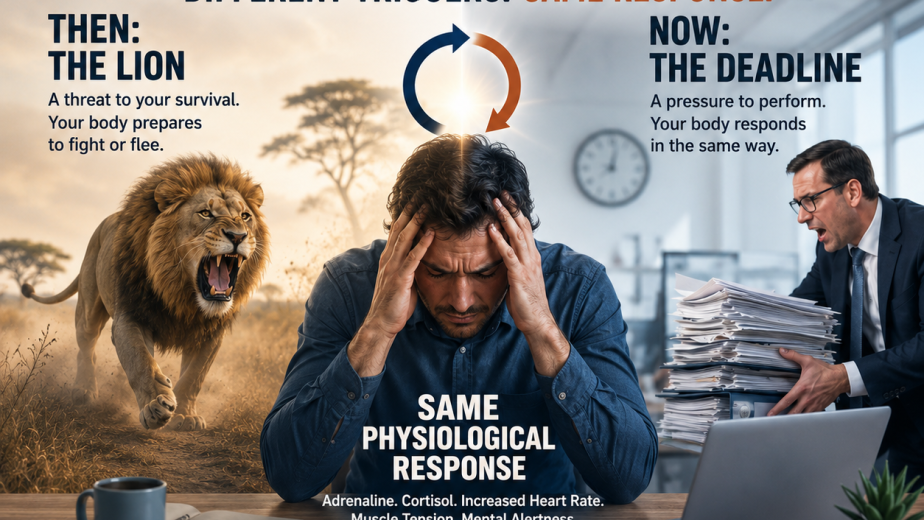
The sympathetic nervous system prepares the body for action. It increases heart rate, raises blood pressure, opens the airways, redirects blood toward working muscles, and helps release stored energy into the bloodstream.
The parasympathetic nervous system does the opposite. It slows heart rate, supports digestion, promotes recovery, and helps the body return to a calmer state after exercise.
During exercise, these two systems do not simply switch on and off like a light. They adjust constantly, second by second, depending on the intensity of the activity.
At rest, the parasympathetic system has a strong influence over the heart. It keeps the heart rate lower and conserves energy. The moment you begin exercising, parasympathetic activity decreases and sympathetic activity increases. This allows your heart rate to rise and your body to shift into performance mode.
This is one of the key principles of exercise physiology: heart rate increases during exercise because the body must deliver more oxygen and fuel to working muscles.
What Happens When You Start Running?
Imagine you are standing at the start of a 10 km run in Lusaka. Even before you begin, your brain anticipates the effort ahead. This is sometimes called central command. Your nervous system begins preparing the body for movement.
As you start running, your muscles immediately require more oxygen. They also begin producing more carbon dioxide and heat. Sensors throughout your body detect these changes and send information back to the brain and spinal cord.
The ANS responds by increasing heart rate, increasing the strength of each heartbeat, widening blood vessels in the working muscles, and reducing blood flow to areas that are less important during exercise, such as the digestive system.
This is why many runners feel that eating a heavy meal too close to a run causes discomfort. During exercise, the body is not prioritising digestion. It is prioritising movement.
The harder you run, the more your sympathetic nervous system contributes. Heart rate rises, breathing becomes deeper and faster, and your body begins using energy at a higher rate.
The Cardiovascular System: Delivery and Removal
A useful way to understand exercise is to think of your cardiovascular system as both a delivery service and a waste-removal system.
It delivers oxygen, glucose, fatty acids, hormones, and nutrients to your working muscles. At the same time, it helps remove carbon dioxide, heat, and metabolic by-products.
When exercise intensity is low, this system can keep up fairly comfortably. You can breathe easily, talk in full sentences, and continue for a long time.
As exercise intensity increases, the demand rises. Your heart must pump more blood, your lungs must exchange more oxygen and carbon dioxide, and your muscles must produce energy more quickly.
This is where heart rate zones become useful.
They help us understand what level of demand we are placing on the body.
What Are Heart Rate Zones?
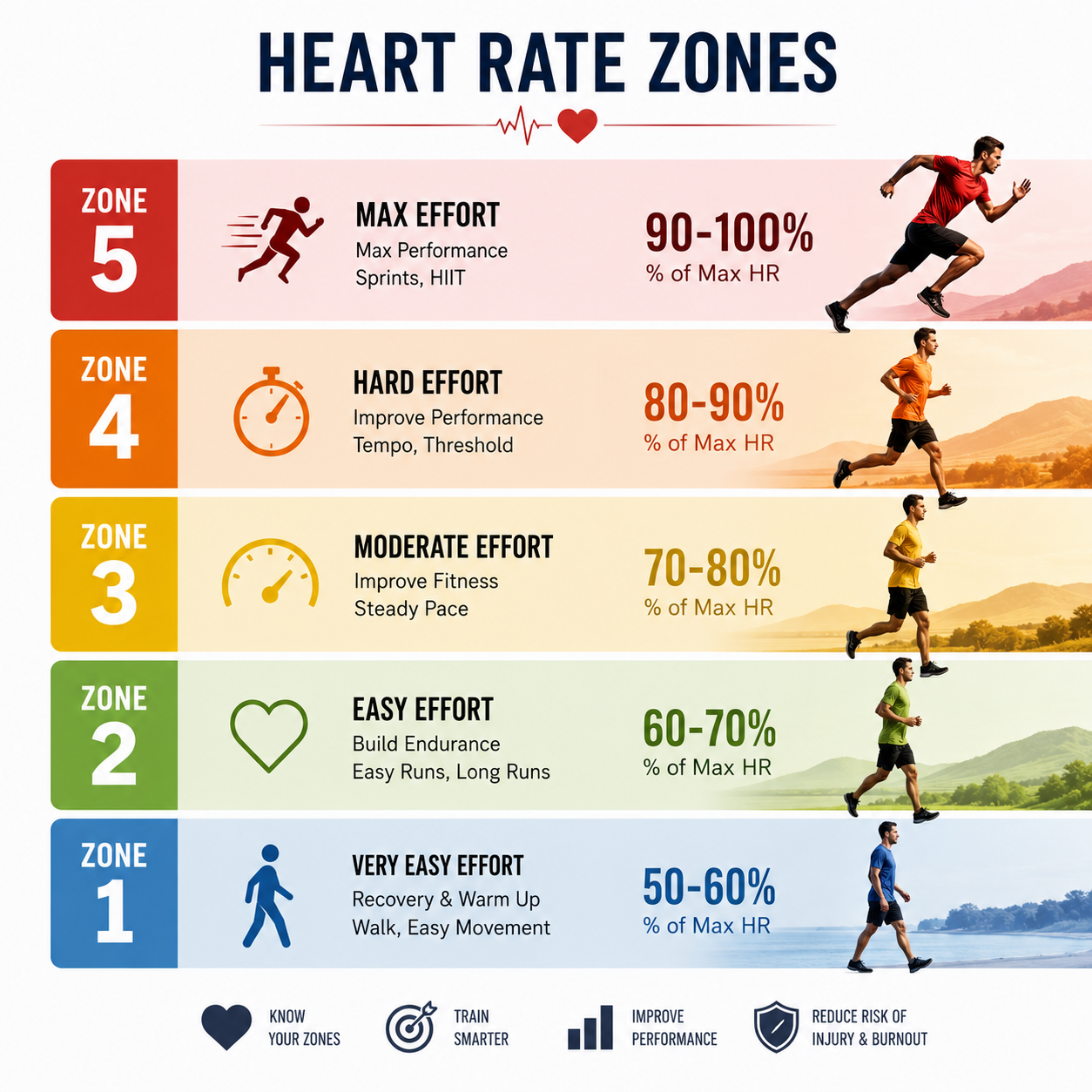
Heart rate zones are ranges of exercise intensity based on a percentage of your maximum heart rate.
Different training platforms may use slightly different models, but a common approach divides effort into five zones.
These zones help runners understand whether they are training for recovery, endurance, aerobic fitness, threshold performance, or maximum effort.
Heart rate zones are not perfect, but they are extremely useful. They give structure to training and help prevent one of the most common mistakes runners make: doing easy runs too hard and hard runs too often.
Zone 1: Very Easy Effort
Zone 1 is the easiest training zone. It usually feels relaxed, light, and comfortable. Breathing is calm and conversation is easy.
Warm-ups, cool-downs, recovery runs, and gentle movement on rest days should take place in this zone.
Many runners underestimate the value of Zone 1 because it does not feel like “serious training.” However, it plays an important role in recovery and consistency. It allows blood flow to increase without placing excessive stress on the body.
For beginners, Zone 1 may include brisk walking or a very gentle jog. However, for experienced runners, it may be an easy recovery run after a harder session.
Zone 1 supports recovery without adding unnecessary strain
Zone 2: Aerobic Base Training
Zone 2 is one of the most important zones for endurance athletes.
This is the zone where you are working, but still in control. Breathing is deeper than at rest, but you should still be able to hold a conversation. Many coaches describe this as conversational pace.
Zone 2 training improves the body’s ability to use oxygen efficiently. It helps develop the aerobic system, supports mitochondrial function, improves fat metabolism, and builds the foundation needed for longer-distance running.
For marathon and half-marathon runners, Zone 2 is especially important because endurance performance depends heavily on the aerobic system.
Many runners make the mistake of skipping this zone because it feels too slow. They believe every run must feel hard to be effective. In reality, much of the best endurance training happens at an intensity that feels almost too easy.
Zone 2 teaches the body to become efficient.
Zone 3: Moderate or Steady Effort
Zone 3 is a moderate intensity zone. It feels more challenging than Zone 2, but it is not yet a full hard effort.
This is the zone where many recreational runners spend too much time. It feels productive because you are working hard enough to sweat and feel challenged, but it may not be easy enough for recovery or hard enough to create the same benefits as threshold or interval training.
This is why many trainers refer to zone 3 as the “grey zone.”
That does not mean Zone 3 is bad. It can be useful for steady runs, tempo development, and race-specific preparation, especially for events like 10 km and half-marathon distances.
The problem is not Zone 3 itself. The problem is living there every day.
If every run becomes moderately hard, the body may accumulate fatigue without receiving enough recovery or enough high-quality intensity.
Zone 3 should be used with purpose.
Zone 4: Threshold Training
Zone 4 is hard.
This is the zone where breathing becomes heavy, speaking becomes difficult, and the body is working close to its sustainable limit.
Zone 4 is often associated with lactate threshold training. This does not mean lactate is bad. In fact, lactate is an important fuel and signalling molecule. The body reaches a point where metabolic by-products accumulate faster than they can be cleared when intensity increase too much.
Training in this zone can improve your ability to sustain a faster pace for longer.
Tempo runs, threshold intervals, hill efforts, or race-pace training are usually performed in zone 4. It is very useful, but it is also demanding.
Because Zone 4 places significant stress on the nervous system, cardiovascular system, muscles, and recovery capacity, it should not dominate every training week.
Zone 4 improves performance, but it requires respect.
Zone 5: Maximum Effort
Zone 5 represents very high-intensity exercise.
This is the zone of short intervals, sprint efforts, final race surges, and very demanding sessions. Whilst in zone 5, breathing is extremely hard, muscles fatigue quickly, and the effort cannot be sustained for long.
Zone 5 training can improve speed, power, VO₂ max, and high-intensity performance. However, it is also the most stressful zone for the body.
The sympathetic nervous system is highly active in Zone 5. Heart rate is near maximum, adrenaline is high, and recovery demand is significant.
This type of training can be valuable, but only when used carefully. Too much high-intensity training without adequate recovery can increase injury risk, reduce performance, disturb sleep, and contribute to burnout.
Zone 5 is powerful, but it is not meant to be an everyday training zone.
Why Heart Rate Zones Matter
Heart rate zones help you match your training to your goal.
If your goal is to build endurance for a marathon, you need a strong aerobic base. That means a large portion of training should happen in Zones 1 and 2.
If your goal is to improve 10 km performance, you still need aerobic conditioning, but you may also benefit from carefully planned Zone 3 and Zone 4 sessions.
When your goal is to improve speed, Zone 5 intervals may have a place, but they must be balanced with easier training and recovery.
And finally, if your goal is weight management and general health, heart rate zones can help you exercise consistently without always pushing too hard as lower and moderate intensity work can be sustained more frequently and may be easier to maintain long term.
Training becomes more effective when each session has a purpose.
Not every run should be hard.
Not every run should be easy.
The key is knowing why you are doing a particular session and what adaptation you are trying to create.
The ANS and Recovery Between Training Sessions
Your heart rate during exercise tells one part of the story. Your recovery after exercise tells another.
After a run, the parasympathetic nervous system should gradually reassert control. Heart rate should come down, breathing should settle, and the body should shift into repair mode.
If your resting heart rate is unusually high the next morning, your legs feel heavy, your sleep was poor, or your heart rate is higher than normal during an easy run, your body may be telling you that recovery is incomplete.
This is where many runners get into trouble. The training plan says “run,” but the body says “recover.”
Learning to listen to these signals is a skill.
Heart rate, heart rate recovery, sleep quality, mood, muscle soreness, and general energy levels all provide clues about your autonomic nervous system balance.
When the sympathetic system remains dominant for too long, performance often suffers. You may feel wired but tired. You may struggle to sleep despite feeling exhausted. Easy runs may suddenly feel difficult. Motivation may drop.
This is not weakness. It is physiology.
Factors That Affect Heart Rate During Exercise
Heart rate is useful, but it must be interpreted in context.
Several factors can cause heart rate to rise even when pace remains the same.
Heat is one of the biggest factors. Running in hot conditions places extra strain on the cardiovascular system because the body must send blood to the skin to help with cooling.
Dehydration can also increase heart rate because blood volume may decrease, forcing the heart to work harder.Poor sleep, stress, caffeine, illness, alcohol, altitude, and accumulated fatigue can all affect heart rate.
This is especially relevant for runners training in Zambia, where heat, sun exposure, hydration, and daily stress can influence performance.
A higher heart rate is not always a sign that you are losing fitness. Sometimes it is simply a sign that the body is under more stress than usual.
Using Heart Rate Zones Practically
For most runners, a simple approach works best.
Easy runs should feel easy. You should be able to talk comfortably and finish feeling like you could have continued.
Remember when planning the hard, purposeful sessions they should be followed with good recovery. When you are building endurance with longer runs they need to be controlled.
Recovery days should not become secret race days.
Heart rate zones help create discipline. They stop you from turning every run into a competition against yourself.
This is particularly important for recreational runners who are training around work, family, stress, and limited recovery time.
The goal is not just to train harder. The goal is to train smarter.
A Word of Caution About Heart Rate Formulas
Many people estimate maximum heart rate using the common formula: 220 minus your age.
This can be useful as a rough guide, but it is not exact. Some people have naturally higher or lower maximum heart rates than predicted.
Fitness watches also estimate zones using algorithms, and wrist-based heart rate monitors may sometimes be inaccurate, especially during intervals, very sweaty runs, or rapid changes in intensity.
During exercise, heart rate zones should be used together with perceived effort, breathing, pace, and how the body feels as the body is not a machine with one fixed number.
Heart rate should be used is a guide, not a prison.
Final Thoughts
The Autonomic Nervous System is constantly adjusting your body during exercise by increasing heart rate when your muscles need more oxygen, redirecting blood flow to where it is needed most, supporting temperature regulation, and helping shift the body into recovery after training.
Heart rate zones give us a practical way to understand this internal regulation.
They allow runners to train with more purpose, build endurance more effectively, improve performance safely, and reduce the risk of constantly overtraining.
The smartest runners are not always the ones who train the hardest. They are the ones who understand when to push, when to hold back, and when to recover.
In the next article in this series, we will explore how your body produces energy during exercise, including ATP, carbohydrates, fats, and why different intensities require different fuel sources.
Book Your Movement and Performance Screening
Understanding exercise physiology is valuable, but understanding your own body is even more powerful. If you are a runner, cyclist, gym-goer, or active individual dealing with pain, stiffness, poor recovery, or recurring injuries, a chiropractic and movement screening can help identify what may be holding you back. Take the next step toward better movement, improved performance, and long-term health. Visit https://drronvanas.com to book your screening with Dr Ron Van As.